Your house has a smell you can't smell. Your guests can — and they're too kind to say it.
I cleaned pet homes for almost twenty years. I could smell it the second I walked in — and the people who lived there never could. Here's why, and why it was never your fault.

Funny thing: the tidiest homes often smelled the worst.
My name's Frédérique. Everyone's called me Fred since grade school. For almost twenty years I cleaned houses around Laval and the North Shore — a lot of them pet homes.
And I want to tell you something I never said out loud to a single client: I could smell the dog the second I walked in. They never could.
It wasn't their fault. It's called nose-blindness — your brain just stops noticing a smell you live in. But I walked into a new house every couple of hours, so my nose never got the chance to quit. I smelled all of it.
And before you picture me as some expert who breezed in and out — honestly, I've got a shaggy golden of my own and the same kind of machine. My own house had been doing it to me for years — I just couldn't smell it either. It took walking into enough other homes to finally understand what I was walking home to.
And the strange part? The houses that smelled the most like a pet usually weren't the messy ones. They were the tidy ones. The ones where someone had done everything right — vacuumed, washed the dog's bed, kept the place clean — and still had a smell sitting under everything they couldn't find or fix. The kind of smell the people who live there stop noticing — but every guest who walks in does.
I know now exactly where it was hiding.
"But I just washed these."
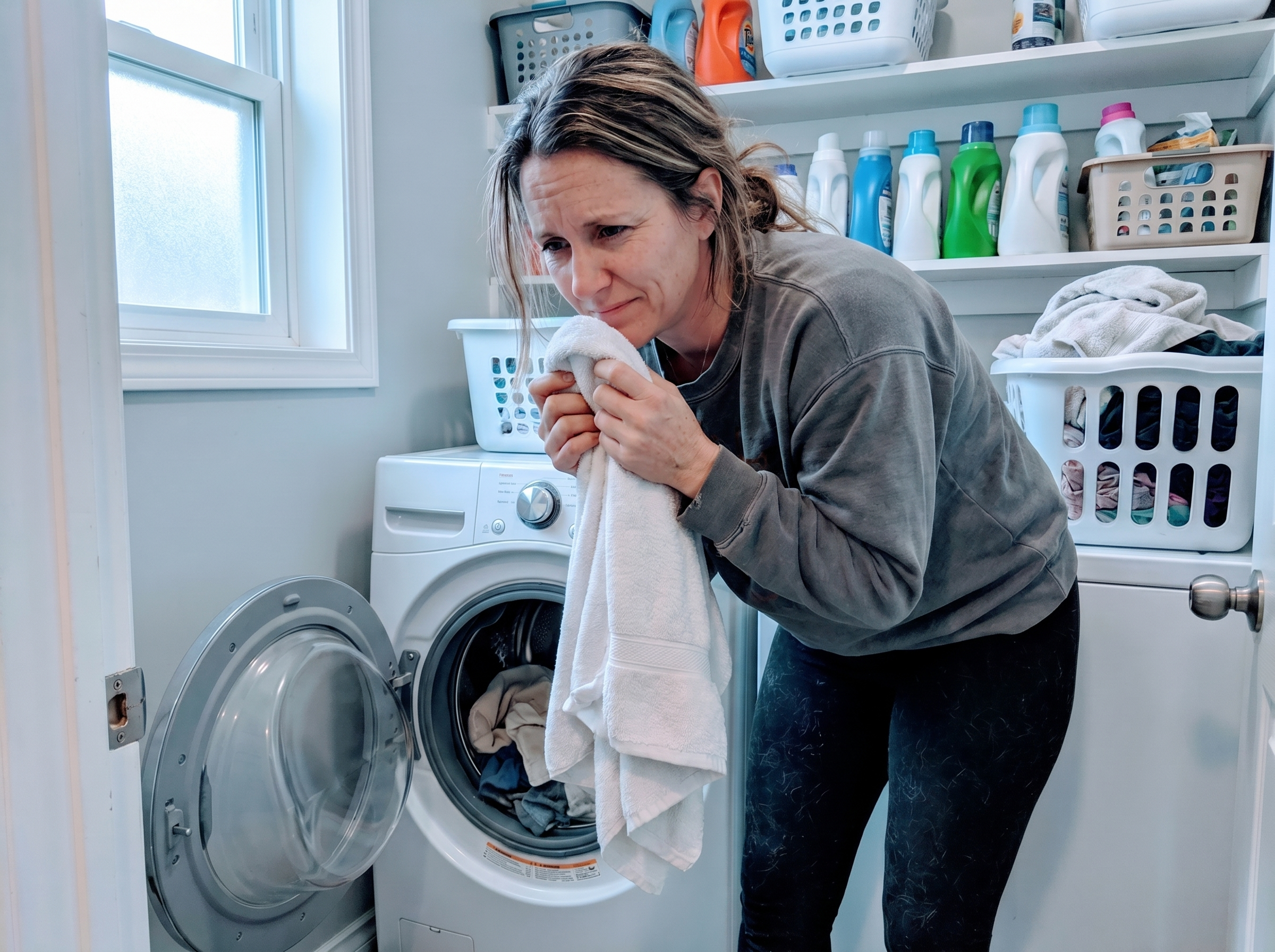
Here's the moment it clicked for me. I was at a client's place, and she pulled a stack of fresh towels out of the dryer to hand me — and they smelled like wet dog. Clean towels. Straight out of the wash.
She went red. "I don't understand," she said. "I just washed these."
And then she listed it all off — the same list I'd hear in house after house after house: Vinegar. Baking soda. Bleach. Leaving the door open. Those Affresh tablets.
It would work for about a week. Then the smell came right back.
She'd started re-washing loads "just in case." She'd half-priced out a new machine. She thought she was doing something wrong.
You weren't doing anything wrong. The machine was.
What she was really afraid of wasn't the smell.
Here's the part she never said out loud — but I already knew. It wasn't the smell that kept her up at night. It was who might be smelling it.
Her mother — the one who notices everything — sitting on the very edge of the couch and leaving before dessert. Her sister borrowing a cardigan and handing it back with a look she couldn't quite read. Her teenager who, somewhere along the way, just stopped bringing friends home.
Nobody ever says it to your face. They just notice — and they're kind enough not to tell you. So you never find out for sure. You only get the little flinches, and you file each one away as nothing.
That's the cruel part. It's not the smell. It's the silence around it — and carrying the worry alone.
She'd done everything right — and she was still bracing herself every single time the doorbell rang.
Your machine was practically built to grow the smell — and nobody warned you.
When she said she was thinking about buying a new washer, something stopped me. Because I'd been hearing about washers — specifically the newer front-loaders — for years.
So I went and read about it. And what I found made me angry.
In the 2000s the industry pushed everyone onto sleek "high-efficiency" front-loaders. Sealed door. Way less water. Cold cycles.
They'd quietly built the perfect little incubator for mold and bacteria. The old top-loaders used to flush themselves out with a lot of hot water. These new ones never do.
This isn't a conspiracy theory. It's in the court record.
From the court record
There were years of U.S. class-action lawsuits alleging that some front-loaders grow a slimy film and "fail to self-clean" — including a long-running federal case, In re: Whirlpool Corp. Front-Loading Washer Products Liability Litigation, covering owners of millions of machines. The complaints alleged what every cleaner already suspected: these sealed, low-water designs can create the conditions where mold and odor build up. And owners who called in often reported being told it was their own job to keep the machine cleaner.
And here's the part that still gets me. The people who called in to complain got told it was their fault — for not cleaning the machine enough. So every woman quietly bracing for the doorbell was carrying a worry that was never hers to carry.
They sold you a machine that does this — then handed you the blame. It was never your laundry. It was never your dog. It was never you.
What's actually growing where you can't see it
So if it's not the dog, and it's not your detergent, and it's not you — what is it?
It's a living film.
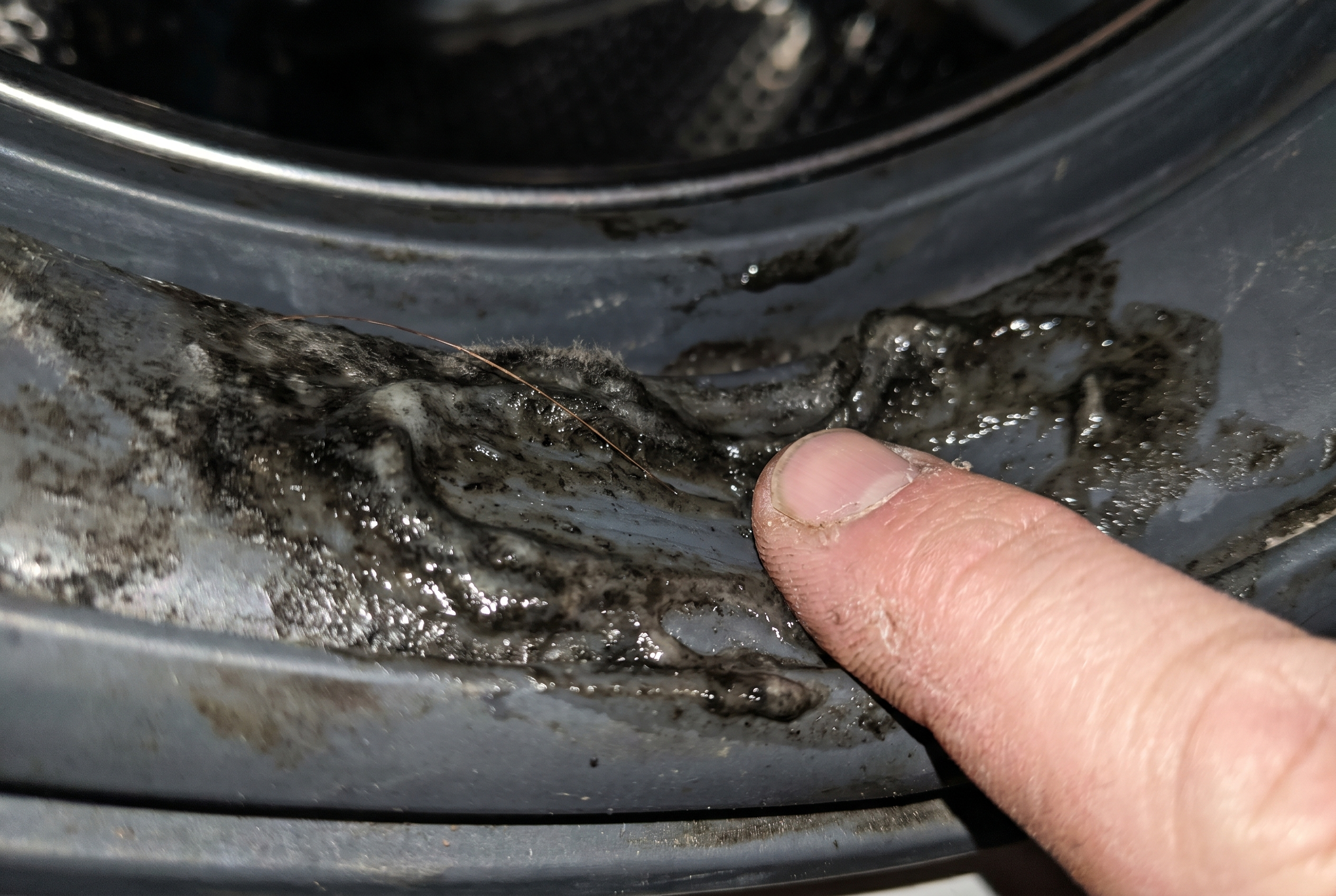
Down inside the parts of your machine you never see — behind the drum, packed into the folds of that rubber door gasket — pet hair, skin oils, dander, and old soap build up into a sticky layer called biofilm. Bacteria live in it and feed on it.
And in a pet home, it builds far faster. Every load is full of fur, saliva and skin oils — and that's just more food for the film. A house with a dog grows this biofilm a lot quicker than a house without animals. That's why it's pet owners who get hit with this, again and again.
Every wash, it gets a little thicker. And every wash, it re-smells your clean clothes on the way out.
If you've ever peeled back the rubber seal on your washer door and found something dark and slimy in there — that's it. That's what's been touching your family's "clean" laundry.
Cold water and these low-water modern machines never wash it away. So it just keeps coming back. Forever. That's why nothing you tried ever held.
Why everything on the store shelf only buys you a week
Once I understood what the smell actually was, the failures finally made sense.
Think of it like plaque on your teeth. You can rinse and rinse all day. But until something actually breaks the film down, it just grows right back.
I needed something that didn't rinse the film. I needed something that ate it.
The one thing that finally worked
I found it almost by accident — an enzyme tablet a supplier showed me. Not bleach. Not oxygen. Enzymes.
Specifically two of them: protease, which digests protein, and lipase, which digests grease. They're the same kind of thing that's been used for years to break down pet urine — pet owners already trust enzymes for exactly this kind of mess.
And these aren't some laundry gimmick. The same families of enzymes — protease and lipase — are the ones industrial and medical cleaners use to break protein and grease off instruments before sterilizing. Because when something has to come clean at a level you can't see, you don't scrub harder. You can't bleach your way through a protein film — you have to digest it.
Here's why this one's not like the others: the film is built out of protein and grease. So enzymes don't cover the smell, and they don't bubble at it. They eat the film's actual food source — until there's barely anything left for the bacteria to feed on.
No scalding hot cycle. Works on a normal wash. No bleach, so it's safe for septic tanks. Safe for HE machines, front-load or top-load.
The first time I ran it in my own machine, my laundry came out smelling like nothing. Just clean. First time in years.
So I started putting it in every pet home I cleaned. And it kept working — house after house after house.
It fizzes like crazy when it hits the water — that's the enzymes and the oxygen going to work. So when it came time to put my own name on the box, my niece said the obvious thing out loud, and it stuck.
It's called FizziFred.
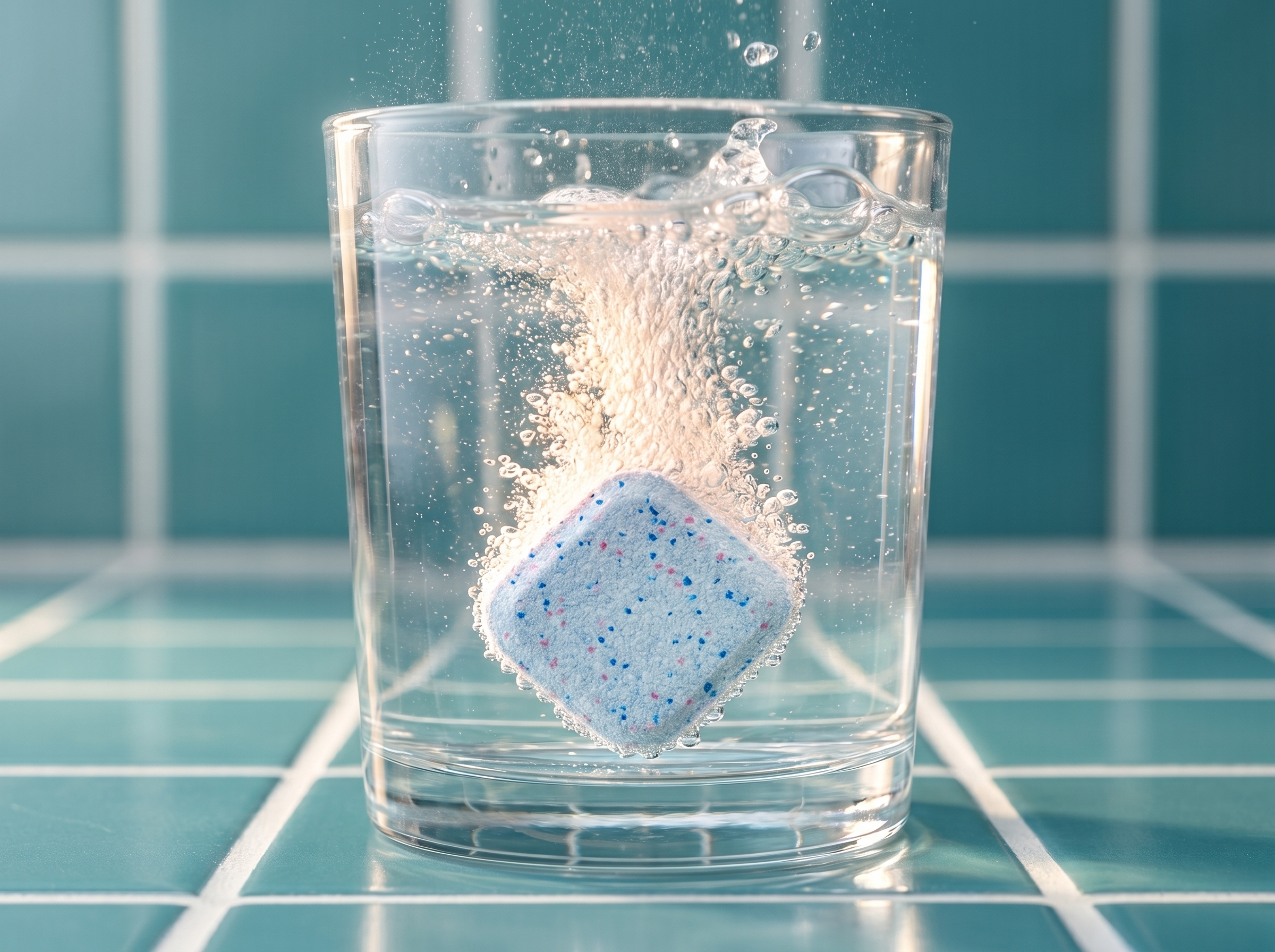
What actually happens when it hits the water
Step 1It breaks down the protein the smell is made of
Protease goes after the dander, skin, saliva and sweat — and takes it apart at the source.
Step 2It digests the greasy film
Lipase dissolves the oily layer that glues all of it to the drum and the door seal.
Step 3The rinse carries the gunk out
Only once the film is digested does oxygen lift the loosened gunk out of the parts you can't reach and rinse it away — so the smell loses what it was feeding on.
Same gasket. A few weeks apart.
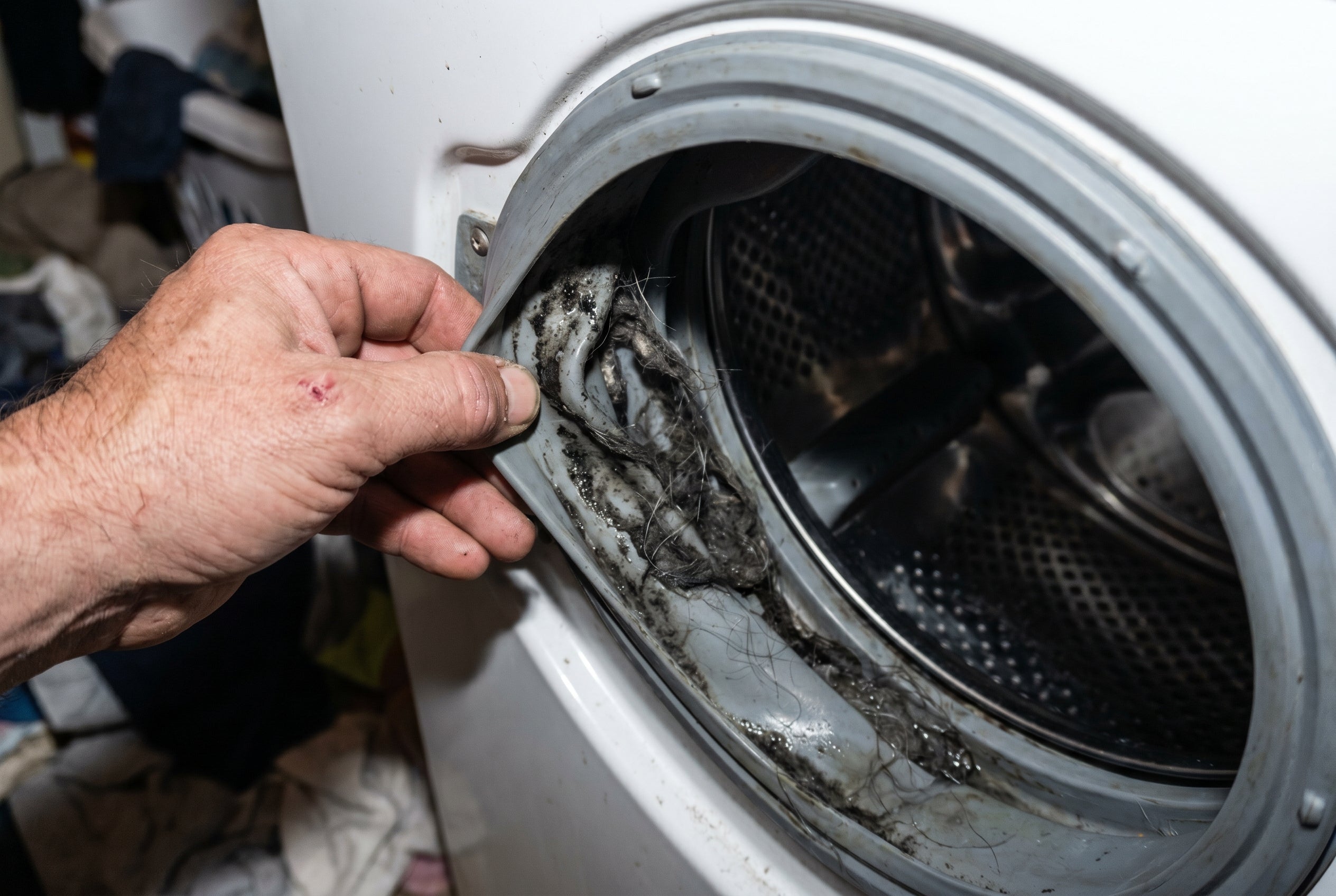
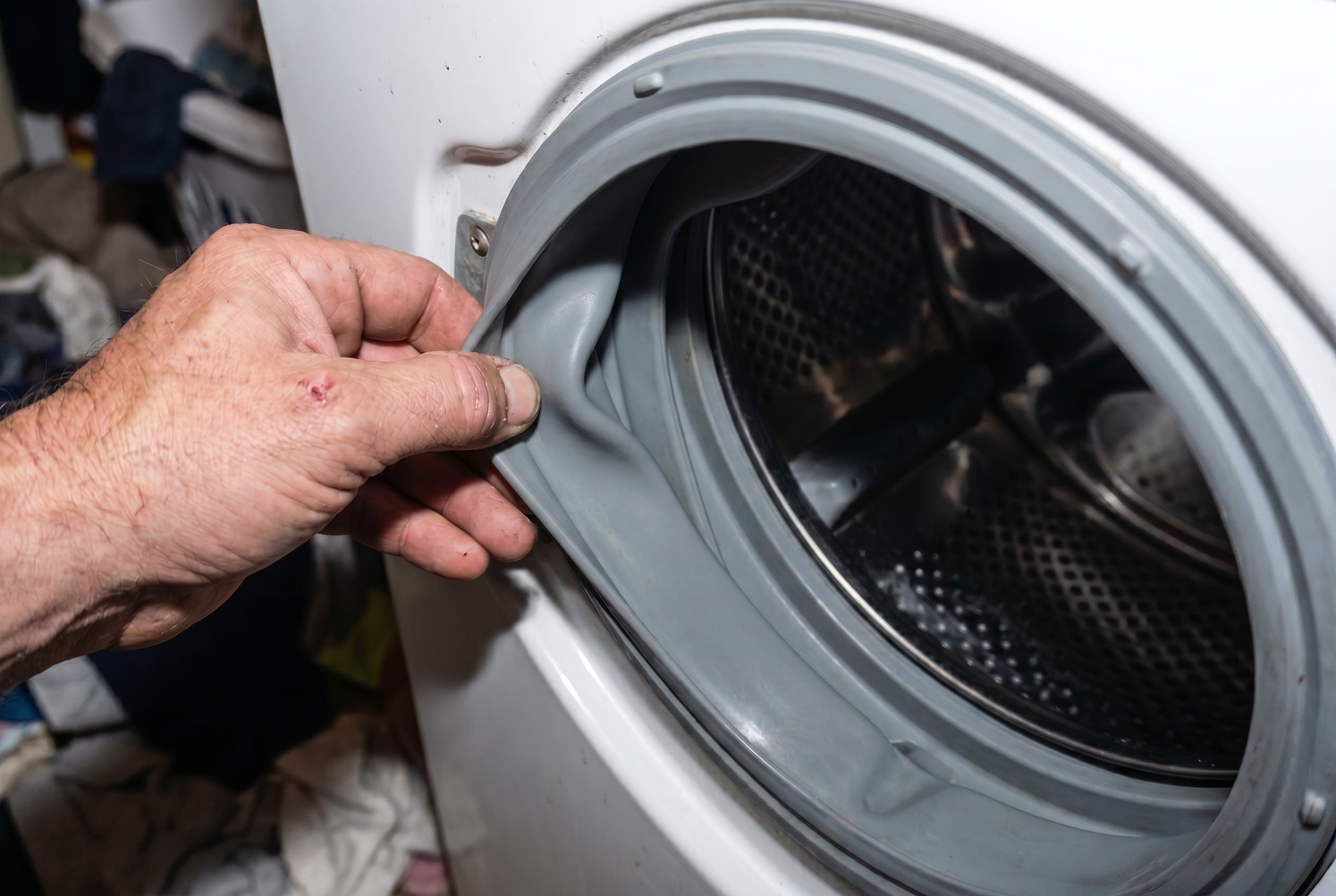
The same door seal — before, and after a few weeks of using the enzymes.
What happened in other people's laundry rooms
"I'd given up and just left the washer door open 24/7. Three washes after my first tablet, I pulled out a load of towels and they smelled like… nothing. I actually called my sister."
"I'll be honest — it's not instant. Took about three weeks of running it before I trusted it. But the black gunk in the gasket is basically gone and my towels stopped announcing the dogs. One star off only because I wish it worked faster."
"Skeptical doesn't cover it — I tried so many products from the store and nothing worked. This is the first one I actually saw a difference with. And on a cold cycle, on top of that."
So — does it actually work, or is this just another tablet?
That's the exact question I'd be asking. You've been burned by "miracle" tablets before — so had every client who ever handed me a stack of towels. So I'm not going to make you a bigger promise. I'm just going to tell you why this is a different job.
It kept coming back because the things you used masked the symptom instead of removing the cause. FizziFred goes after the cause. Different job entirely.
With this one you can. Open the door on your next couple of loads and your laundry smells like nothing — just clean. That's the tell.
The oxygen ones do. Enzymes don't. Normal cycle is fine.
No bleach. It's septic-safe and gentle on tanks and fields.
Yes — HE-safe, every machine type, made for pet homes from the start.

Why one tablet won't fix it forever (and that's the point).
People ask me, "If it really fixes the cause, why would I ever need to buy it again?"
Because your dog doesn't stop shedding, and your machine doesn't stop trying to rebuild that film. One tablet every couple of weeks keeps it from building back up.
It's not a fix that failed and needs re-buying — it's maintenance, like brushing your teeth. You're not paying to chase the smell anymore. You're paying to never think about it again.
A box of 24 is about a year of that.
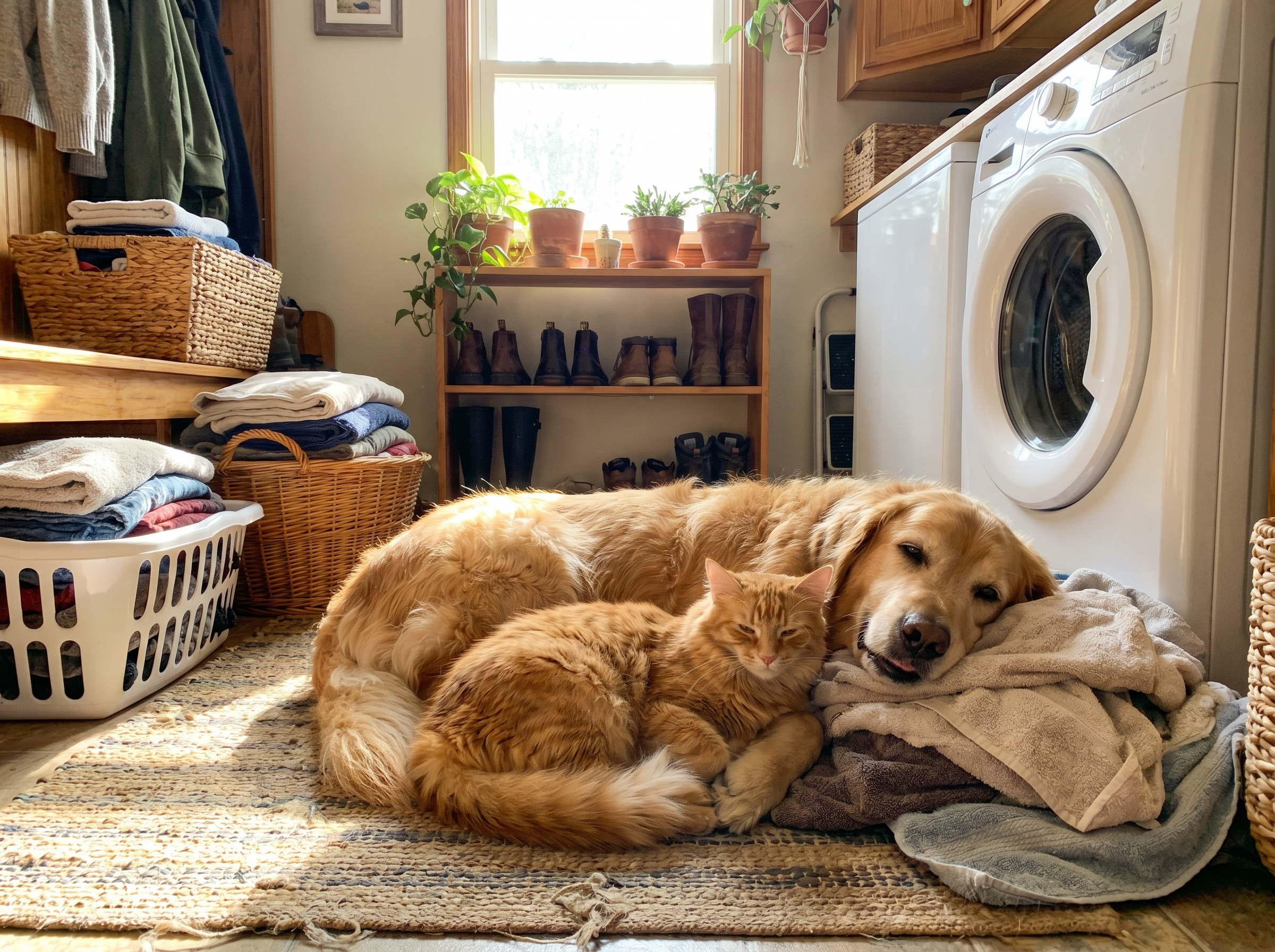
The part I didn't see coming was what it gave people back. One client told me her mother had quietly stopped staying for dessert — always "had to get going." After we sorted her machine out, she started staying again. No more bracing when someone steps inside. Nothing left for anyone to notice.
Why isn't it in stores yet?
FizziFred isn't in grocery stores or pharmacies yet — I only just launched it, and we're still a small local outfit. For now it's only on our own site. Grab it while you can.
You finally know what it was.
And exactly what ends it.
One enzyme tablet, doing the job those store-shelf tablets only ever masked.

One tablet, an empty cycle, every couple of weeks. That's the whole routine — and you stop bracing for the doorbell.
Every box is backed by a 60-day money-back guarantee. If it doesn't hold, you mail it back — simple.
— Fred